LIVE Pricing & Availability
Search NOW

Croatia: Top tips for 2026
Tuesday, 21st April 2026
Here's four places we reckon are worth sailing to on your Croatian catamaran charter in 2026.

Croatia has over a thousand islands, and most day-tripping tourists see about four of them! However, when you charter a yacht or catamaran the real Croatia opens up — the version that doesn't appear on coach-tour itineraries. Here's four places we reckon are worth sailing for...
The Pakleni are a scatter of pine-covered islets stretching west from Hvar harbour, and Vinogradišće Bay on Sveti Klement — the largest island — is the one worth building your afternoon around. It's a horseshoe of turquoise water fringed with pines and palms, with restaurants and bars right on the shoreline, and a laid-back, golden-hour energy that's hard to find anywhere else on the Croatian coast.
The place to be is Laganini — a beach bar and restaurant with its feet essentially in the water, cabanas for hire, and a wine list that takes the local stuff seriously. It's stylish without being pretentious, and the seafood is excellent. Book ahead in July and August or you'll be watching from the water.
Which, to be fair, is also a perfectly good option. Drop anchor in the bay, mix your own drinks in the cockpit, and watch the whole scene unfold from fifty metres away. The light here at dusk is something else.
The island has a quiet, unhurried character that the more famous neighbours lost years ago — and Konoba Nevera, tucked into the village of Stomorska on the eastern coast, is the kind of place that makes you want to cancel the next two days of sailing and just stay.
It's a proper family-run konoba: stone walls, a terrace hanging over the water, a menu that changes with whatever came off the boat that morning. Order the grilled fish. Order the local olive oil on everything. Ask about the wine — Šolta has its own indigenous grape variety, Dobričić, which produces a deep, slightly wild red you won't find anywhere else.
The mooring is easy, the village is genuinely charming, and the bill at the end will make you slightly emotional. This is what Croatia used to be like everywhere.
The cliffs here collapsed inward over millennia to leave a near-perfect circle of turquoise water, ringed by 150-metre rock walls, entered through a gap barely wide enough for a dinghy. What the photos never show is Stiniva at six in the evening, after the tripper boats have gone and the cove goes almost completely quiet.
The light at golden hour hits those walls and turns everything amber and pink. There's a small beach bar at the back — simple food, cold local wine, candles as it gets dark — and the whole thing feels so removed from ordinary life that it's almost disconcerting.
Sail in early evening, stay the night at anchor, leave in the morning before anyone else arrives. That's the Stiniva most people never get to see.
It’s effectively uninhabited in any real sense, with no permanent settlement and only a couple of seasonal konobas and a small marina that flickers into life in summer. The coastline is deeply folded and broken, creating a chain of quiet, well-protected anchorages that feel a world away from the busier channels, even in peak season.
Sailing here is close and absorbing — weaving between limestone islets and narrow passages where the sea changes character every mile. Just outside Kornati National Park, it offers the same stark, almost lunar island landscape, but with space to breathe, linger, and anchor where the day — not the flotilla schedule — sets the pace.
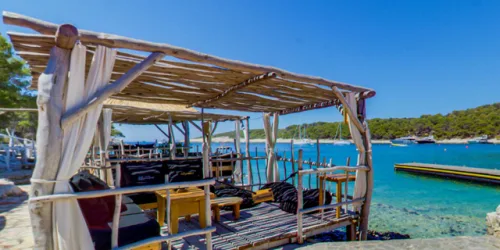 Vinogradišće Bay, Pakleni Islands
The Pakleni are a scatter of pine-covered islets stretching west from Hvar harbour, and Vinogradišće Bay on Sveti Klement — the largest island — is the one worth building your afternoon around. It's a horseshoe of turquoise water fringed with pines and palms, with restaurants and bars right on the shoreline, and a laid-back, golden-hour energy that's hard to find anywhere else on the Croatian coast.
The place to be is Laganini — a beach bar and restaurant with its feet essentially in the water, cabanas for hire, and a wine list that takes the local stuff seriously. It's stylish without being pretentious, and the seafood is excellent. Book ahead in July and August or you'll be watching from the water.
Which, to be fair, is also a perfectly good option. Drop anchor in the bay, mix your own drinks in the cockpit, and watch the whole scene unfold from fifty metres away. The light here at dusk is something else.
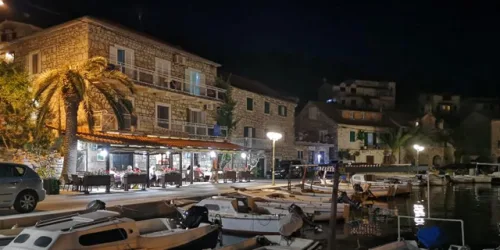 Konoba Nevera, Šolta
The island has a quiet, unhurried character that the more famous neighbours lost years ago — and Konoba Nevera, tucked into the village of Stomorska on the eastern coast, is the kind of place that makes you want to cancel the next two days of sailing and just stay.
It's a proper family-run konoba: stone walls, a terrace hanging over the water, a menu that changes with whatever came off the boat that morning. Order the grilled fish. Order the local olive oil on everything. Ask about the wine — Šolta has its own indigenous grape variety, Dobričić, which produces a deep, slightly wild red you won't find anywhere else.
The mooring is easy, the village is genuinely charming, and the bill at the end will make you slightly emotional. This is what Croatia used to be like everywhere.
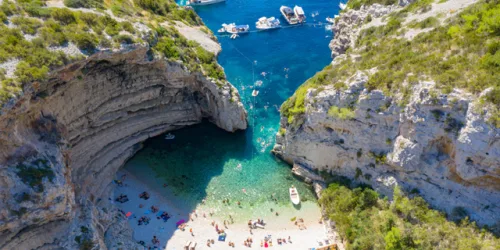 Stiniva Beach at Dusk, Vis
The cliffs here collapsed inward over millennia to leave a near-perfect circle of turquoise water, ringed by 150-metre rock walls, entered through a gap barely wide enough for a dinghy. What the photos never show is Stiniva at six in the evening, after the tripper boats have gone and the cove goes almost completely quiet.
The light at golden hour hits those walls and turns everything amber and pink. There's a small beach bar at the back — simple food, cold local wine, candles as it gets dark — and the whole thing feels so removed from ordinary life that it's almost disconcerting.
Sail in early evening, stay the night at anchor, leave in the morning before anyone else arrives. That's the Stiniva most people never get to see.
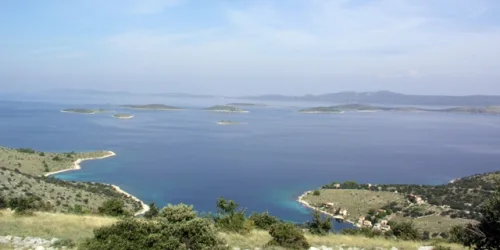 Zut Island, Kornati
It’s effectively uninhabited in any real sense, with no permanent settlement and only a couple of seasonal konobas and a small marina that flickers into life in summer. The coastline is deeply folded and broken, creating a chain of quiet, well-protected anchorages that feel a world away from the busier channels, even in peak season.
Sailing here is close and absorbing — weaving between limestone islets and narrow passages where the sea changes character every mile. Just outside Kornati National Park, it offers the same stark, almost lunar island landscape, but with space to breathe, linger, and anchor where the day — not the flotilla schedule — sets the pace.
Related articles
-

FINAL CALL to set sail in 2026
If you want to get out on the water (again) this year, time is running out!
-

Our Favourite Restaurants You Can Sail To
We get asked all the time "Where should we eat?" THIS is where... :)
-

Making it 'Plain Sailing'
Our team do their absolute best to make each and every booking 'Plain Sailing'
-

Summer is HERE!
The summer sailing season has finally arrived, and this weekend is our biggest yet - and it only gets busier and busier for the next few months! And you can see why...
-

Happy Easter!
Wishing all our customers a very Happy Easter!
-

Greece is HOT in 2026
Greece is still the number one destination for a sailing holiday, but there is more choice than ever!